
0 of 12 lessons completed · 0% complete
How to Store Coffee Beans Properly
Air, heat, light and moisture make roasted coffee lose aroma faster. Good storage is simple: keep beans sealed, cool, dry and dark.
By KAVOVO5 minutes read
The short answer
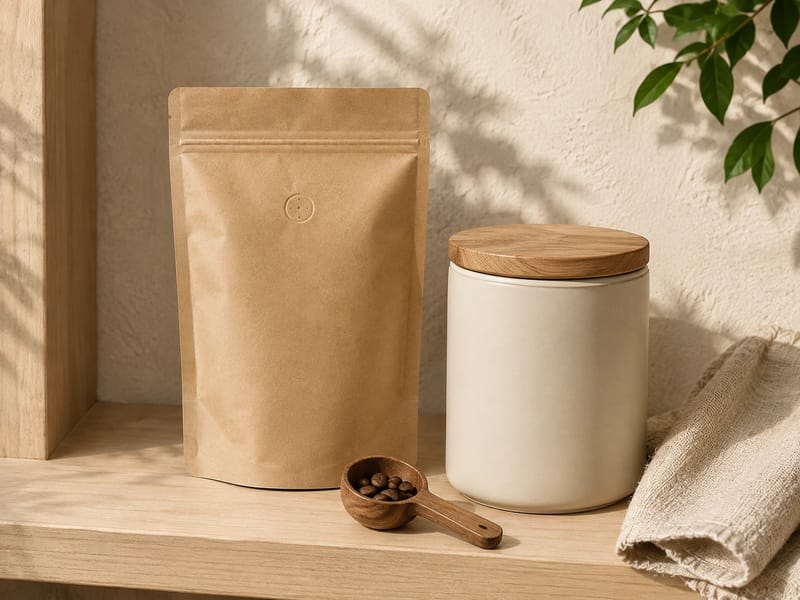
Keep roasted coffee in an airtight, opaque container or a well-sealed valve bag, inside a cool and dry cupboard. Buy amounts you can use while the coffee still tastes lively, and grind only what you need immediately before brewing.
The four enemies of roasted coffee
Air
Oxygen gradually changes aromatic compounds and makes coffee taste flatter. Every time a container is opened, fresh air enters.
Use the smallest practical container for the amount of coffee you have. A huge jar holding a small handful of beans also holds a generous serving of oxygen.
Heat
Warm conditions speed up staling. Keep coffee away from ovens, radiators, sunny windows and the top of appliances that become hot.
A normal cool kitchen cupboard is usually better than a beautiful jar beside the cooker.
Light
Direct sunlight and strong light can accelerate flavour deterioration. Choose an opaque container or store the bag inside a closed cupboard.
Moisture
Roasted coffee readily absorbs moisture and surrounding odours. Keep it dry and avoid repeatedly moving it between cold and warm environments where condensation can form.
Can coffee stay in its original bag?
Yes—if the bag is designed for storage.
A good coffee bag usually has:
- an effective zip seal;
- an opaque material;
- a one-way valve that allows gas to leave without letting much air back in.
After taking out the dose, squeeze excess air from the bag and close it fully. If the bag does not reseal properly, transfer the beans to a clean, dry, airtight and opaque container.
Whole beans or ground coffee?
Whole beans stay aromatic longer because less surface area is exposed. Grind only the amount needed for the next brew.
If you buy pre-ground coffee, storage becomes even more important. Keep it tightly sealed and buy smaller quantities.
Should coffee go in the fridge?
Usually, no.
Fridges contain moisture and food odours, and the container experiences temperature changes every time it is removed. Coffee can absorb both moisture and smells.
For everyday coffee, a cool cupboard is simpler and more reliable.
Freezing coffee properly
Freezing can be useful when you buy more coffee than you can use soon, but the packaging matters.
For longer storage:
- Divide the coffee into small portions.
- Seal each portion in a genuinely airtight bag or container with as little air as practical.
- Freeze each portion once.
- Remove only the portion you need.
- Keep the container sealed while it returns to room temperature, or grind the beans directly from frozen if your grinder handles this reliably.
Do not open one large frozen bag every morning and return it to the freezer. Repeated temperature changes invite condensation.
Roast date, best-before date and freshness
Coffee does not suddenly become undrinkable on a particular day. It gradually loses aroma and character.
The best tasting window varies with the coffee, roast level, packaging and brewing method. Very fresh coffee can also release enough gas to make brewing inconsistent, particularly for espresso.
Use the roaster’s guidance, pay attention to the roast date and buy smaller amounts more frequently. Your own tasting notes are more useful than treating one universal freshness window as a deadline.
A simple storage routine
- Buy whole beans in an amount that suits your actual consumption.
- Write the opening date on the bag if you tend to forget it.
- Keep the bag or container sealed between uses.
- Store it in a cool, dry cupboard.
- Grind immediately before brewing.
- Freeze only the coffee you genuinely need to keep longer.
Try this today
Check where your coffee is stored. If it sits beside the kettle, oven or a sunny window, move it to a closed cupboard. Make sure the seal closes completely and remove any coffee dust trapped in the zip.
Key takeaway
Protect coffee from air, heat, light and moisture. Good storage cannot make old coffee fresh again, but it can stop good coffee from becoming dull sooner than necessary.
Finished this lesson?
0 of 12 lessons completed · 0% complete