
0 of 8 lessons completed · 0% complete
How to Clean an Espresso Machine
Clean coffee and milk residue before it hardens, and follow the machine manual for internal cleaning.
By KAVOVO7 minutes read
The short answer
Clean the parts that touch coffee and milk before residue has time to harden.
- After every shot: knock out the puck, rinse the basket and wipe it dry.
- After every milk drink: wipe and purge the steam wand immediately.
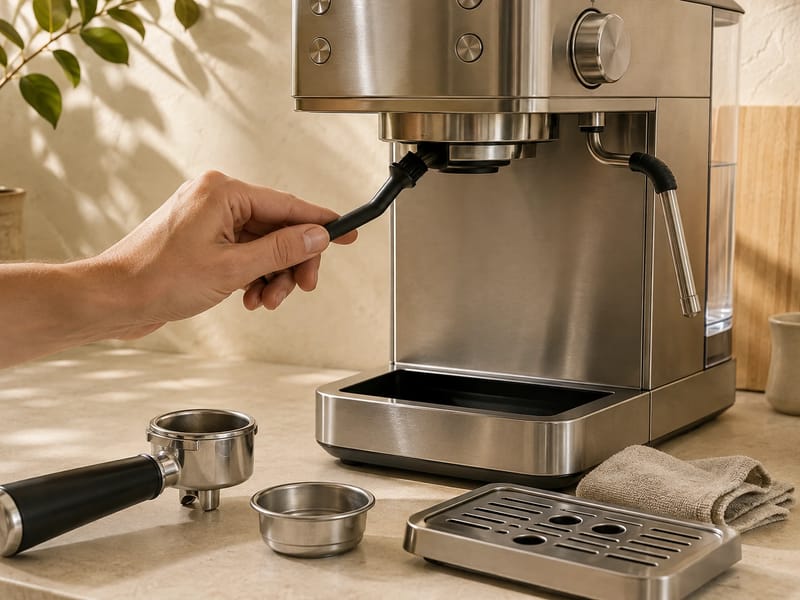
- At the end of the day: brush the group area, clean the basket and portafilter, empty the drip tray and wipe the machine.
- Periodically: backflush with water or detergent only if the machine supports it, and descale only according to the manufacturer’s instructions and your water hardness.
Never backflush a machine without a suitable three-way valve. The manual wins every argument in this lesson.
Why cleanliness changes flavour
Coffee oils collect on the basket, portafilter, shower screen and group seal. As they age, they become stale and bitter. Milk residue can block steam holes, smell unpleasant and create a hygiene problem.
A dirty machine can make every coffee taste harsh even when the recipe is correct. Before using another bag of beans to solve the problem, clean the equipment that touched the previous bag.
After every espresso shot
- Remove the portafilter and knock out the puck.
- Rinse or wipe remaining grounds from the basket.
- Run a brief water flush if recommended for your machine.
- Wipe the basket dry before preparing the next dose.
Do not leave a used puck locked into the machine. Heat bakes oils onto the basket and group area, and the damp puck does nothing useful while it waits.
Keep the portafilter installed while the machine warms, but clean and dry it first.
After every milk drink
- Close the steam valve before removing the pitcher.
- Wipe the wand immediately with a dedicated damp cloth.
- Point it over the drip tray and purge briefly.
Do not wait until the milk forms a hard crust. Avoid scraping the wand with metal tools, which can damage its finish.
If the steam holes become blocked, let the wand cool and follow the manual for removing and soaking the tip. Never handle or unscrew a pressurised hot wand.
Use a separate cloth for the steam wand. A cloth carrying old milk should not travel around the rest of the machine like a small dairy-themed disaster.
End-of-day routine
For a home machine used several times a day:
- brush loose grounds from the group head and around the gasket;
- wash the basket and metal parts of the portafilter with warm water;
- clean the drip tray and grate;
- wipe the body with a soft damp cloth;
- rinse the water tank if it contains debris or a visible film;
- leave clean parts dry and ready for the next session.
Do not immerse the complete portafilter if it has a wooden, coated or electronic handle. Do not put parts in a dishwasher unless the manufacturer says they are dishwasher-safe.
Backflushing: check the machine first
Backflushing sends water and cleaning solution through the group’s internal release path. It is suitable only for machines designed for it, usually those with a three-way solenoid valve.
If the manual approves backflushing:
- Insert the blind basket or cleaning disc specified for the machine.
- Use the machine’s cleaning cycle or the pulse sequence in the manual.
- Use espresso-machine detergent only at the stated dose.
- Rinse thoroughly with repeated clean-water cycles.
- Pull and discard a shot if the manual recommends it.
Water-only backflushing may be useful more often than detergent cleaning. Detergent frequency depends on usage, coffee roast and machine design. More chemical is not more clean; it is more chemical to rinse away.
Machines without a backflush path need a different cleaning procedure. Forcing a blind basket into one can damage the pump or seals.
Cleaning the basket, portafilter and shower screen
Remove the basket and soak compatible metal parts in hot water with the correct amount of espresso cleaner when the manual recommends it. Keep plastic, rubber, wood and finished handles out of the solution unless approved.
Rinse every part thoroughly. Coffee detergent left in the basket has a flavour profile best described as “health and safety meeting”.
Some machines allow the shower screen to be removed for cleaning; others should be serviced by a technician. Do not dismantle the group while it is hot, pressurised or connected to power.
Descaling is not the same as cleaning
Coffee detergent removes coffee oils. Descaler removes mineral deposits. One does not replace the other.
How often to descale depends on water hardness, filtration, boiler design and usage. Some machines require a specific product or a service procedure. Follow the manual and local water conditions rather than a universal monthly schedule.
Do not use vinegar unless the manufacturer explicitly allows it. It can damage some materials, leave odour behind and may not suit the machine’s internal design.
Filtered water can reduce scale, but many filters do not remove every scale-forming mineral. Very low-mineral or distilled water can also cause extraction or machine-sensor problems. Use water suitable for coffee and for the machine warranty.
A practical schedule
| Frequency | Task |
|---|---|
| After each shot | Knock out puck, rinse basket, brief group flush if recommended |
| After each milk use | Wipe and purge steam wand |
| End of day | Brush group, wash basket and portafilter, empty tray, wipe machine |
| Weekly or by usage | Inspect shower screen, steam tip, tank and seals; water-backflush if supported |
| As prompted or specified | Detergent cleaning cycle or detergent backflush |
| Based on water and manual | Descale or arrange service |
Increase cleaning frequency when the machine serves many drinks, uses oily dark-roasted coffee or shows restricted flow.
Try this today
Remove the basket and inspect its underside, the portafilter spouts and the group seal with good light. Clean them according to the machine manual, then pull one espresso using the same recipe as before.
If the cup tastes cleaner and less bitter, the grinder was never the suspect.
Key takeaway
Small cleaning actions after every use prevent difficult cleaning later. Remove coffee oils, purge milk residue promptly, backflush only supported machines and follow the exact manual for detergent and descaling procedures.
Finished this lesson?
0 of 8 lessons completed · 0% complete