
0 of 7 lessons completed · 0% complete
Coffee Freshness and Roast Dates
Freshness balances two processes: helpful degassing and gradual aroma loss.
By KAVOVO6 minutes read
The short answer
Coffee freshness is a curve, not a switch.
Immediately after roasting, beans release carbon dioxide. Too much trapped gas can make brewing uneven, especially for espresso. As coffee rests, it often becomes sweeter and easier to extract. Later, oxygen and time reduce aroma and make the cup flatter.
For many coffees, begin tasting after roughly 5–14 days. Espresso may benefit from 7–21 days or more, and very light roasts can need longer. These are starting ranges, not expiry rules.
What the roast date tells you
The roast date records when green coffee was roasted. It helps you estimate degassing and aroma loss.
It does not tell you:
- how the coffee was packaged;
- how much oxygen entered the bag;
- whether the roast is light or dark;
- whether the bag sat in heat or sunlight;
- the exact day the coffee will taste best.
Use the date with roast style, packaging, brewing method and taste.
Degassing: why coffee can be too fresh
Roasting creates carbon dioxide inside the porous bean. Much of it escapes quickly after roasting, then release continues more slowly.
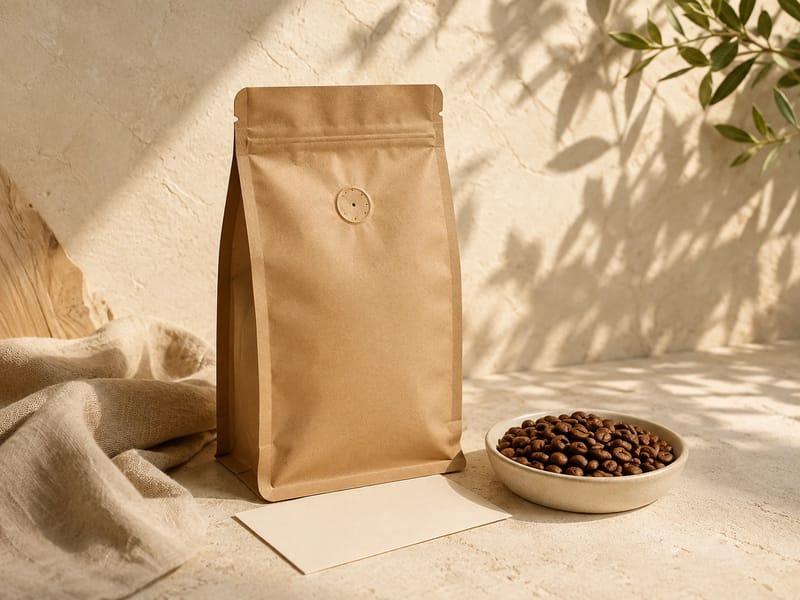
A one-way valve lets gas leave a sealed bag without allowing large amounts of outside air back in.
Coffee brewed very soon after roasting may show:
- an unusually large bloom in filter brewing;
- excessive crema or unstable flow in espresso;
- sharp, gassy or underdeveloped flavour;
- difficulty wetting and extracting the grounds evenly.
The solution is often rest, not a heroic new recipe.
Staling: what happens later
Fresh aroma compounds are volatile and vulnerable to oxygen. Over time, the coffee loses intensity and can develop flat, papery, woody or rancid characteristics.
Grinding accelerates the process because it exposes far more surface area. That is why whole beans retain useful aroma longer than pre-ground coffee after opening.
Staling begins gradually. Coffee does not become undrinkable at midnight on day 29.
Practical resting windows
No universal schedule fits every coffee, but these ranges offer a sensible place to begin:
| Coffee and method | First useful tasting point | What to expect |
|---|---|---|
| Medium or dark roast for filter | About 3–7 days | Often settles relatively quickly |
| Light roast for filter | About 7–14 days | May become clearer and sweeter with more rest |
| Medium espresso roast | About 7–14 days | Flow usually becomes easier to control |
| Light espresso roast | About 14–28 days, sometimes longer | Dense coffee may need extended degassing |
Roaster advice should override a generic table when they have tested that coffee.
Many well-packed whole-bean coffees remain enjoyable for several weeks after these starting points. Some very light roasts perform well beyond a month. Dark roasts may lose their strongest aroma sooner because their more porous structure releases gas quickly.
How to know the coffee is ready
Look for performance and taste:
- the aroma is open rather than smoky or trapped;
- filter bloom is active but manageable;
- espresso flow is repeatable rather than wildly foamy;
- sweetness and flavour become clearer;
- the coffee no longer tastes sharply gassy.
If the coffee improves from day 7 to day 14, continue using it. The best date is the one your cup demonstrates.
Signs coffee is fading
Older coffee may show:
- weaker aroma when grinding;
- flatter sweetness;
- papery, woody or dull flavour;
- faster espresso flow at the same setting;
- less crema;
- less distinction between flavour notes.
Adjusting the grinder can keep espresso flowing correctly, but it cannot restore aroma that has oxidised.
Store beans well
Keep coffee:
- sealed;
- cool;
- dry;
- away from direct light;
- away from strong odours.
The original resealable valve bag is often an excellent container. Squeeze out excess air gently and reseal it after each use. An opaque airtight container is useful when the original bag does not close securely.
Avoid repeatedly opening a large container. Every opening replaces the protected atmosphere with fresh oxygen.
Should coffee go in the fridge?
Usually not for daily storage. Refrigerators contain moisture and strong food aromas, and the container experiences condensation risk when moved between cold and room temperature.
Freezing is more useful for long-term storage when done properly.
How to freeze coffee
- Divide beans into airtight portions containing only what you will use after opening.
- Remove as much air as practical and seal well.
- Freeze while the coffee is still in a good freshness window.
- Thaw the unopened portion completely before opening, preventing condensation on the beans.
- Do not repeatedly thaw and refreeze the same package.
For single-dose frozen coffee, some grinders can grind directly from frozen, but follow the grinder manufacturer’s guidance.
Research and practical experience show that low temperatures slow aroma loss and degassing. Freezing does not improve poor coffee; it preserves the state you put into the freezer.
Roast date versus best-before date
The roast date helps you manage flavour. The best-before date identifies the producer’s expected quality period for an unopened product and supports retail requirements.
Choose a roast-dated bag when you want precise control. Do not assume a best-before-only coffee is unsafe or unusable; it simply gives less information about peak freshness.
Try this today
Open a fresh bag and brew the same recipe on three different days—for example day 7, day 14 and day 28. Record aroma, bloom or crema, extraction behaviour, sweetness and aftertaste.
You will build a freshness guide for your coffee and equipment rather than borrowing one from the internet.
Key takeaway
Freshly roasted coffee needs time to release gas, then gradually loses aroma through oxygen exposure. Use the roast date to plan, taste across several days, store beans sealed and freeze airtight portions when you need longer preservation.
Finished this lesson?
0 of 7 lessons completed · 0% complete