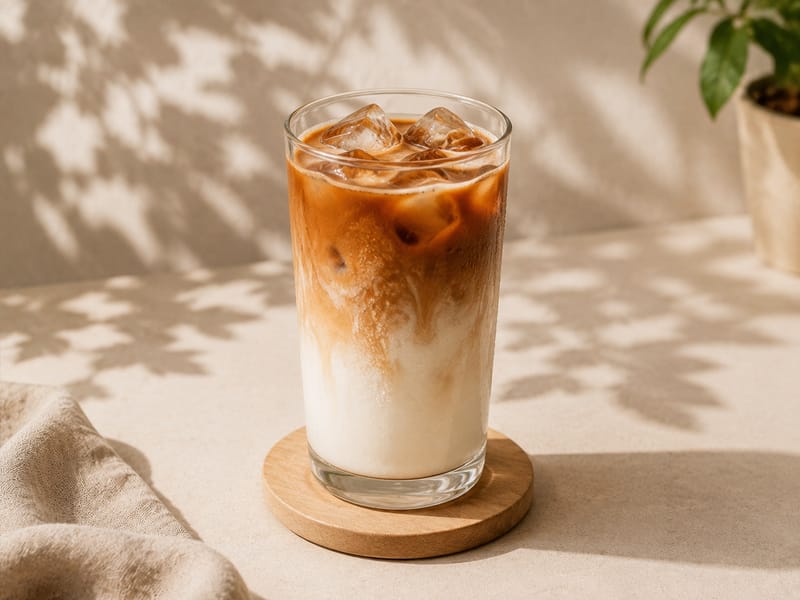
Brown Sugar Shaken Espresso
Espresso shaken with brown sugar, ice and a touch of cinnamon, then finished with cold oat milk. Strong, lightly sweet and naturally frothy.
Shake safely: Never shake hot espresso in a sealed container without ice. Add the ice first, use a proper metal cocktail shaker and point it away from your face when opening.

- Dose
- 18 g
- Yield
- 300–350 ml
- Time
- 7 min
- Vessel
- Tall glass, 300–350 ml
Ingredients
Ratio 1:2
Per shot
18 g in 36 g out
Keep the same target time and adjust the grind if needed.
- 18 g freshly ground coffee
- 36 g espresso, target yield
- 8 g soft brown sugar
- a small pinch ground cinnamon (optional)
- 120 g ice
- 60–80 ml cold barista oat milk
Equipment
- Espresso machine
- Portafilter and basket
- Coffee grinder
- Tamper
- Digital scale
- Timer
- Metal cocktail shaker
- Spoon
- Measuring jug
Tap each step as you brew.
Brown Sugar Shaken Espresso is stronger and lighter than a traditional iced latte. Shaking hot espresso with brown sugar and plenty of ice cools the coffee quickly and creates a delicate natural foam. A small amount of oat milk softens the drink without hiding the espresso.
This iced shaken espresso is a useful middle ground between a black iced coffee and a milk-forward latte. The result is an espresso with oat milk that remains clearly coffee-led, while the brown sugar brings a light caramel note. For a homemade shaken espresso, the order matters: dissolve the sugar while the coffee is hot, then add the espresso to ice before sealing the shaker.
Steps
- Prepare the espresso. Grind 18 g of coffee and pull a double espresso, aiming for a final yield of 36–40 g.
- Dissolve the brown sugar. Immediately add 8 g of soft brown sugar and an optional small pinch of cinnamon to the hot espresso. Stir until completely dissolved.
- Add the ice. Place approximately 120 g of ice into a metal cocktail shaker, then pour the sweetened espresso over it. The ice must be added before the shaker is sealed.
- Shake the espresso. Seal the shaker and shake firmly for 10–15 seconds, until the outside becomes very cold and the espresso develops a light foam.
- Pour the drink. Pour the shaken espresso and ice into a 300–350 ml glass.
- Add the milk. Slowly add 60–80 ml of cold oat milk around the edge of the glass to preserve some of the layered appearance. Serve immediately.
Shake Safely
Never shake hot espresso in a sealed container without ice. Add the ice first so the espresso begins cooling immediately. Use a proper metal cocktail shaker and point it away from your face when opening.
A metal cocktail shaker is recommended. Do not seal and shake hot espresso in an ordinary glass jar, as heat and pressure may cause the jar to leak or break.
Ingredient Notes
Brown sugar
Soft brown sugar dissolves easily in hot espresso and adds a light caramel flavour. Alternatively, use 10 ml of brown sugar syrup.
Oat milk
Barista oat milk gives the drink a smooth texture and complements the brown sugar. Dairy milk or another plant-based milk can also be used.
Quick Ratio
| Ingredient | Amount |
|---|---|
| Espresso | 36–40 g |
| Brown sugar | 8 g |
| Ice | 120 g |
| Oat milk | 60–80 ml |
Compared with an iced latte, a shaken espresso uses more coffee in relation to milk. This keeps the espresso flavour noticeable after shaking and dilution. For a dependable espresso base, start with a 1:2 coffee-to-water ratio.
Brown Sugar Shaken Espresso vs Iced Latte
| Feature | Shaken Espresso | Iced Latte |
|---|---|---|
| Preparation | Espresso shaken with ice | Espresso poured over milk and ice |
| Milk | 60–80 ml | Usually 120–180 ml |
| Coffee flavour | Stronger | Softer |
| Texture | Light and frothy | Smooth and creamy |
| Sweetness | Lightly sweetened | Optional |
Choose this recipe when you want a lighter drink with a stronger espresso presence. Choose the Iced Latte recipe for a creamier, more milk-forward result.
Troubleshooting
The drink is not frothy
The shaker may not have been moved firmly enough, there may be too little ice, the espresso may have stood for too long or the shaker may be overfilled. Shake firmly for 10–15 seconds using enough ice to chill the espresso quickly.
The drink tastes watery
Too little ice, an overly long espresso yield or too much time at room temperature can make the drink thin. Use a 1:2 espresso ratio, plenty of fully frozen ice and cold milk. More ice can cool the drink faster and reduce continued dilution; the Journal explains why ice changes coffee dilution.
The sugar remains at the bottom
Add the brown sugar while the espresso is still hot and stir until completely dissolved before adding it to the shaker.
The cinnamon forms clumps
Use only a small pinch and dissolve it with the brown sugar. Too much cinnamon can create a dry, powdery texture.
The oat milk hides the coffee flavour
Reduce the oat milk to 50–60 ml or use a slightly shorter espresso yield.
Variations
- Less sweet: use 4 g brown sugar instead of 8 g.
- Dairy version: replace the oat milk with 60–80 ml cold whole milk.
- Vanilla brown sugar: add 2–3 drops of vanilla extract or 5 ml vanilla syrup.
- Stronger version: use 40–45 g espresso and 50–60 ml oat milk.
- Without an espresso machine: use 45–50 ml concentrated Moka Pot coffee. The texture may be less frothy than it is with classic espresso.
More Iced Espresso Ideas
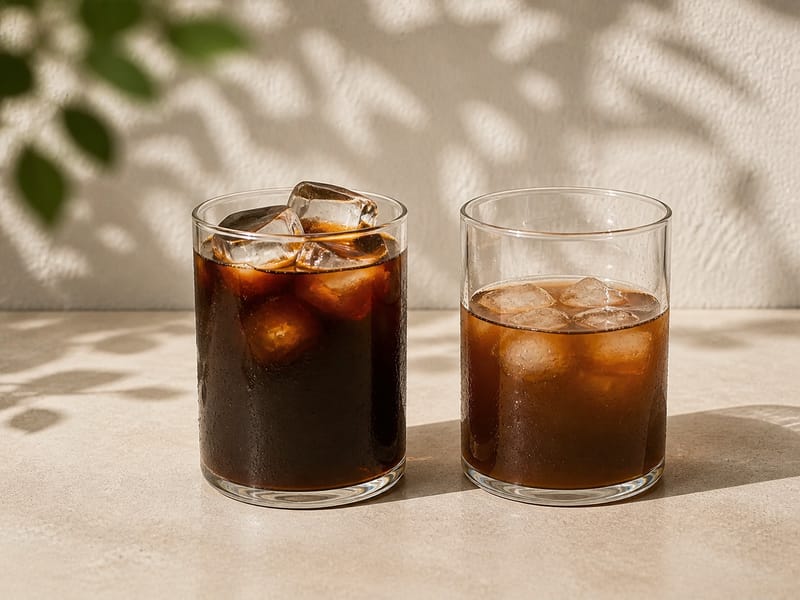
For a cold black coffee, make an Iced Americano. For a sweeter milk drink without shaking, try the Iced Caramel Latte, or add a lighter topping with the Iced Salted Vanilla Cloud Foam.
Browse all nine drinks in the Iced Coffee recipe collection.