
Ice Is an Ingredient: Why Your Iced Coffee Tastes Watery
Ice changes the strength and balance of coffee from the first sip to the last. Learn how ice size, temperature and quantity affect dilution — and how to build a better iced drink.
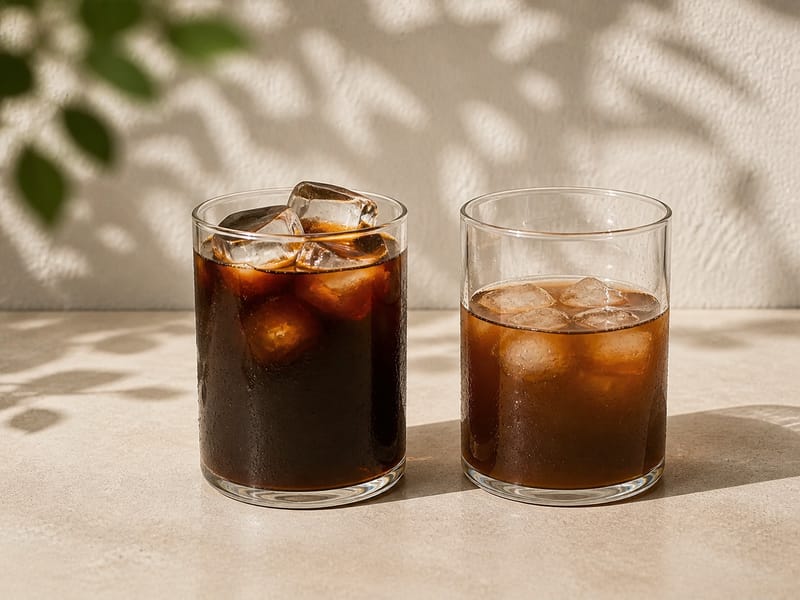
A glass of iced coffee can taste balanced when you make it and disappointingly thin by the time you reach the last sip. The coffee has not changed. The recipe has — because the ice has become water.
We usually treat ice as the final detail in an iced coffee recipe: fill the glass, pour in the drink and move on. But ice does much more than make coffee cold. It changes the strength, texture, sweetness and balance of the drink from the moment the first cube begins to melt.
If you want an iced coffee that remains enjoyable for longer than three minutes, ice needs to be treated as a measured ingredient rather than decoration.
The First Sip and the Last Sip Are Different
A hot coffee recipe is relatively stable once it reaches the cup. It slowly cools, but the ratio of coffee to water remains almost unchanged.
Iced coffee behaves differently.
As the ice melts, more water enters the drink. An Iced Americano becomes weaker, an Iced Latte loses some of its creamy texture and a flavoured drink may begin to taste strangely sweet but no longer taste much like coffee.
This explains why the first sip can feel intense and slightly unbalanced while the final third tastes thin. In many cases, the recipe was designed only for the moment it was assembled — not for the ten or fifteen minutes it takes to drink.
There is no way to prevent ice from melting completely. That is not the goal. The aim is to build the drink so that a reasonable amount of dilution improves its balance rather than destroys it.
Ice Is Part of the Water Ratio
Suppose you make an Iced Americano using:
- 40 g of espresso;
- 120 ml of cold water;
- 120 g of ice.
The recipe does not remain at 40 g of espresso and 120 ml of water. Some of the ice melts while cooling the espresso and continues to melt as the drink sits.
If 20 or 30 g of ice becomes water, that water is now part of the brewing ratio whether you measured it or not.
The exact amount of dilution depends on several things:
- the temperature of the espresso;
- the temperature of the water or milk;
- the amount and size of the ice;
- the temperature of the glass;
- the room temperature;
- how quickly the drink is consumed.
This is why copying a recipe without considering temperature can produce completely different results. A drink made with refrigerated milk and a chilled glass will behave differently from the same recipe made with room-temperature ingredients.
Why More Ice Can Mean Less Dilution
It sounds backwards, but adding only a few ice cubes does not necessarily reduce dilution.
A small amount of ice has to absorb heat from the entire drink. It melts quickly, the drink may still not become properly cold and the remaining ice continues to disappear.
A glass filled with plenty of hard, fully frozen ice cools the drink faster. Once the liquid is cold, melting slows down.
Cube size also matters. Large, dense cubes generally melt more slowly than small or hollow cubes because they have less exposed surface area in relation to their volume.
For most iced coffee drinks, a nearly full glass of good ice works better than three lonely cubes fighting for their lives at the bottom.
The practical rule is simple:
Use enough ice to cool the drink quickly, but make the coffee slightly stronger than you would for a hot milk drink.
Does Hot Espresso Melt Too Much Ice?
Pouring hot espresso directly over ice is not automatically wrong.
It cools the espresso quickly and can preserve the refreshing contrast that makes an iced drink enjoyable. Some melting is expected and should be considered part of the recipe.
Problems usually appear when:
- the espresso is poured over a very small amount of ice;
- the glass and other ingredients are warm;
- the drink already contains too much water;
- the coffee is too weak before dilution begins.
If you want to reduce the initial melt, brew the espresso into a small chilled pitcher and swirl it for 20–30 seconds before pouring. There is no need to leave it standing for several minutes.
For an Iced Latte, cold milk absorbs part of the espresso’s heat. For an Iced Americano, using refrigerated water before adding the espresso helps the drink reach a stable temperature more quickly.
Does the Order of Ingredients Matter?
The order changes the appearance more than the final flavour, especially if the drink is stirred before drinking.
For an attractive layered Iced Latte:
- Fill the glass with ice.
- Add cold milk.
- Pour the espresso slowly over the top.
For a more evenly chilled drink:
- Add cold water or milk.
- Pour in the espresso.
- Stir briefly.
- Add enough ice to fill the glass.
For an Iced Americano, adding water before espresso can preserve more crema on the surface. Adding espresso first creates a more uniform drink once stirred.
Neither method is universally correct. Choose the order based on whether you value presentation, immediate cooling or consistency.
A beautiful layer is useful for a photograph. A balanced drink is useful for actually drinking.
Start with Colder Ingredients
One of the easiest ways to control dilution is to reduce the amount of heat the ice must absorb.
Use:
- milk directly from the fridge;
- refrigerated or chilled filtered water;
- a cool glass;
- ice that is completely frozen;
- syrup stored at room temperature in small quantities rather than large warm additions.
You do not need to freeze the glass, but chilling it for a few minutes can help on a warm day.
Avoid using ice that has been sitting in a partly melted tray or an open container. Apart from melting faster, it may absorb unwanted freezer odours. Coffee is expressive enough without a subtle note of frozen peas.
A Starting Formula for Iced Americano
For one balanced drink:
- 18 g ground coffee;
- 36–40 g espresso;
- 90–120 ml cold water;
- 100–140 g ice.
Start with 90 ml of water if you prefer a stronger drink or expect to drink it slowly. Use closer to 120 ml for a lighter result.
Fill the glass with ice, add the cold water and pour the espresso over the top. Taste immediately, then taste again after five minutes.
If the final drink becomes too weak, reduce the water before reducing the ice.
A Starting Formula for Iced Latte
For one drink:
- 18 g ground coffee;
- 36–40 g espresso;
- 120–150 ml cold milk;
- 100–140 g ice.
Use 120 ml of milk for a more coffee-forward drink and 150 ml for a softer, creamier result.
Fill the glass with ice, add the milk and pour in the espresso. Stir before judging the final balance.
If the drink tastes weak, the first solution is not always an extra espresso shot. Try slightly less milk or use a shorter espresso yield while keeping the same coffee dose.
What About Coffee Ice Cubes?
Coffee ice cubes can prevent a drink from becoming watery, but they are not essential.
They work best in cold brew or simple iced coffee. In milk drinks, they may make the final flavour stronger and more bitter than intended as they melt.
If you use them, freeze coffee that is clean and balanced rather than leftover coffee that already tastes stale. Freezing does not magically improve it. The freezer has many talents; editing bad coffee is not one of them.
Test the Drink, Not Just the Recipe
The most useful iced coffee test takes ten minutes.
Make your usual drink and taste it at three points:
- immediately after mixing;
- after five minutes;
- after ten minutes.
Ask:
- Is the first sip too strong?
- When does the drink taste most balanced?
- Does the coffee remain noticeable?
- Does the sweetness become stronger as the coffee weakens?
- How much ice remains?
If the first sip is strong but the drink becomes balanced after a few minutes, the recipe may already be working as intended.
If it tastes perfect immediately and watery five minutes later, reduce the added water or milk rather than simply adding less ice.
The KAVOVO Approach
There is no universal amount of ice that works for every drink, glass and room temperature. But there is a better way to think about it:
- ice is part of the total water;
- colder ingredients create less initial dilution;
- more properly frozen ice can perform better than a few cubes;
- large cubes usually melt more slowly;
- the coffee should remain balanced after several minutes, not only when it is poured.
A good iced coffee recipe is not a fixed photograph. It changes while you drink it.
The goal is not to stop that change. The goal is to account for it.