
0 of 12 lessons completed · 0% complete
Cold Brew vs Iced Coffee: What’s the Difference?
Cold Brew extracts coffee with cool water for many hours, while iced coffee is brewed hot or as espresso and then chilled over ice.
By KAVOVOUpdated 8 minutes read
The short answer
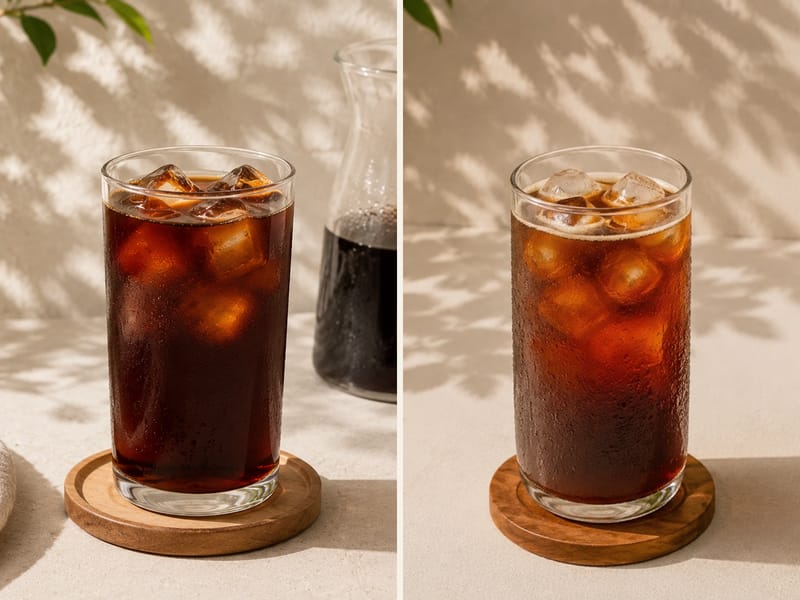
Cold Brew extracts coarsely ground coffee with cool water for roughly 12–18 hours. Iced coffee is a wider category, usually brewed hot or made with espresso before being cooled with ice.
Cold Brew often tastes round, smooth and low in perceived acidity. Hot-brewed iced coffee can taste brighter and more aromatic. Cold Brew is not automatically stronger or higher in caffeine: concentration, dilution, coffee dose and serving size decide the final drink.
Cold Brew vs Iced Coffee Comparison
| Feature | Cold Brew | Iced coffee |
|---|---|---|
| Brewing temperature | Cool or room-temperature water | Usually hot water or espresso |
| Brewing time | 12–18 hours | Minutes |
| Typical taste | Smooth, chocolate-led, rounded | Bright, aromatic, method-dependent |
| Perceived acidity | Usually lower | Usually more noticeable |
| Body | Medium to heavy | Light to medium |
| Caffeine | Depends on concentration and dilution | Depends on dose and serving size |
| Storage | Several days when filtered and chilled | Best fresh |
| Best for | Make-ahead batches | Fast, freshly made drinks |
How Cold Brew Is Made
Cold Brew combines coarse coffee grounds with cool water, leaves them to extract slowly and then filters the liquid. It can be brewed ready to drink or as a stronger concentrate that is diluted with water or milk before serving.
The Overnight Cold Brew recipe uses 60 g coffee and 600 ml water, then serves the filtered coffee over ice with dilution to taste. Grind coarse enough that the final drink does not become muddy, and keep the brew covered in the fridge.
Low brewing temperature slows extraction. The long contact time compensates, but it does not pull exactly the same balance of acids and aromas as a hot brew.
What Counts as Iced Coffee?
Iced coffee is an umbrella term rather than one fixed recipe. It can mean hot filter coffee brewed directly over a measured amount of ice, chilled batch brew, espresso diluted with cold water or a milk drink built over ice.
An Iced Americano tastes bold and clean because it combines espresso, cold water and ice. An Iced Latte uses milk as the main liquid and feels creamier. Both are iced coffees, but neither is Cold Brew.
For either espresso-based option, the Espresso brew guide helps make sure the hot base tastes balanced before ice and dilution enter the recipe.
The Iced Coffee Recipes collection compares espresso, filter, milk and cold-extracted options without treating them as interchangeable.
Brewing Temperature
Cold Brew never relies on hot water during extraction. Cool water dissolves flavour more slowly and tends to emphasise chocolate, nut and mellow roast character while muting some bright acidity and volatile aroma.
Most iced coffee begins hot. Heat extracts quickly and can reveal floral, fruit and caramel notes. Ice then chills and dilutes the brew. That dilution should be part of the recipe, particularly for Japanese-style iced filter coffee where some brewing water is deliberately replaced with ice in the server.
Neither temperature is inherently better. Choose cold extraction for a round profile and hot extraction for more immediate aroma and brightness.
Brewing Time
Cold Brew rewards planning rather than speed. A typical batch needs 12–18 hours plus filtering. Brewing much longer can add woody bitterness, while an overly fine grind makes filtration slow and leaves sediment.
Iced coffee can be ready in minutes. Pull espresso, add cold water or milk and ice, or brew filter coffee over a measured ice portion. That speed also means it is easy to make one serving instead of committing coffee and fridge space to a batch.
Taste and Acidity
Cold Brew commonly tastes smooth, full and gently sweet, with lower perceived acidity. “Low acidity” describes the sensory impression, not a guarantee about the drink’s measured pH or its effect on every stomach.
Hot-brewed iced coffee often has clearer acidity and more aroma. A light-roast iced filter can show citrus or florals; an Iced Americano can carry chocolate and caramel from espresso. If hot coffee tastes harsh over ice, improve the extraction and control dilution rather than assuming the method itself is flawed.
The Journal article Ice Is an Ingredient explains why colder ingredients and enough solid ice protect the last sip.
Caffeine and Concentration
Cold Brew does not always contain more caffeine. Concentrate may be very strong before dilution, but the ready drink depends on how much water or milk is added. A ready-to-drink 1:10 Cold Brew and an iced filter coffee can be far closer than their names suggest.
Compare the dry coffee dose per serving. A concentrate made with 60 g coffee and divided into four diluted drinks is different from drinking the concentrate undiluted. An iced espresso drink may use one or two shots; a large filter brew may use considerably more coffee.
Species matters too. A blend containing Robusta may contribute more caffeine than 100% Arabica at the same dose, but recipe and portion remain essential.
Storage and Freshness
Properly filtered Cold Brew can keep in a clean sealed bottle in the fridge for several days. Aroma fades and oxidation continues, so a week is an upper practical limit rather than a target. Add milk only when serving so the base stores more safely and predictably.
Hot-brewed iced coffee is best made fresh. Chilled filter coffee can be refrigerated for a short period, but it loses aroma and may taste flat by the next day. Espresso-based drinks should be assembled when you plan to drink them.
Which Is Easier to Make?
Cold Brew needs little active technique: mix, wait and filter. It is easy when you plan ahead and want several servings, but it uses more coffee and requires fridge space.
Iced coffee is easier for an immediate single drink. Espresso requires a machine, while a pour-over over ice needs a dripper and a controlled recipe. Both demand more action than Cold Brew at serving time but avoid an overnight wait.
Which Should You Choose?
Choose Cold Brew for make-ahead convenience, a smooth chocolate-led profile and easy batch serving. Choose hot-brewed iced coffee for brighter flavour, fresh aroma and the freedom to switch between black and milk drinks one glass at a time.
When caffeine matters, choose by dose and final dilution rather than the name on the menu. When flavour matters, try both with the same coffee: cold extraction shows its round side, while hot brewing reveals more acidity and aroma.
Frequently asked questions
Is Cold Brew the same as iced coffee?
No. Cold Brew is extracted with cool water for many hours. Iced coffee is a broad category that also includes hot filter coffee, espresso and milk drinks cooled with ice.
Does Cold Brew always have more caffeine?
No. Caffeine depends on coffee dose, concentration, dilution and serving size. Cold Brew concentrate can be strong, but a properly diluted serving may contain less caffeine than a large iced filter coffee.
Why does Cold Brew taste less acidic?
Cool water extracts a different balance of compounds and tends to mute bright acidity and volatile aroma. The result often tastes rounder, although roast, coffee and recipe still affect perceived acidity.
Can hot coffee be poured over ice?
Yes. Use enough solid ice and account for the water it contributes as it melts. Hot brewing can preserve bright flavours when the recipe is deliberately concentrated before chilling.
How long does Cold Brew keep in the fridge?
Filtered Cold Brew keeps for several days in a clean sealed container, with about one week as a practical upper limit. Its aroma gradually fades, so fresher is still better.
Which is easier to make at home?
Cold Brew is simpler in active technique but requires an overnight wait. Iced coffee is faster for one serving, particularly when you already have an espresso machine or filter brewer.
Key takeaway
Cold Brew is a slow extraction method; iced coffee is a family of chilled drinks. Compare dose, dilution and serving size before comparing caffeine, then choose smooth make-ahead coffee or bright fresh brewing.
Finished this lesson?
0 of 12 lessons completed · 0% complete