
0 of 12 lessons completed · 0% complete
Americano vs Filter Coffee: What’s the Difference?
An Americano dilutes espresso after extraction, while filter coffee is brewed at its final strength as water passes through coffee grounds and a filter.
By KAVOVOUpdated 8 minutes read
The short answer
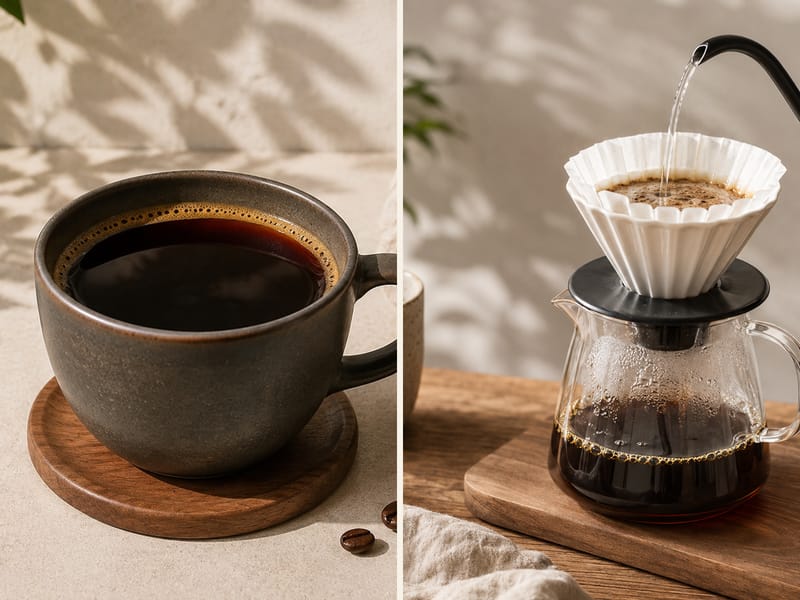
An Americano is espresso diluted with hot water after brewing. Filter coffee is extracted at its final drinking strength as water passes through ground coffee and a paper or metal filter.
An Americano often tastes bolder and carries more espresso texture. Filter coffee is usually cleaner and can reveal more delicate aroma. Neither is automatically stronger or higher in caffeine; dose, ratio and serving size decide that.
Americano vs Filter Coffee Comparison
| Feature | Americano | Filter coffee |
|---|---|---|
| Brewing method | Espresso plus hot water | Water passes through a bed of coffee |
| Extraction | Concentrated first, diluted afterwards | Extracted directly at drinking strength |
| Typical taste | Bold, roast-led, espresso-like | Clear, aromatic, origin-led |
| Body | Medium, sometimes slightly creamy | Light to medium, especially with paper |
| Typical serving | 160–240 ml | 200–350 ml |
| Caffeine | Depends on espresso dose | Depends on coffee dose and serving size |
| Equipment | Espresso machine | Dripper or filter machine |
| Best for | Espresso character in a longer drink | Clarity and an easy larger cup |
How an Americano Is Made
An Americano begins with a complete espresso extraction. A common home recipe uses 18 g coffee to produce 36–40 g espresso, followed by 80–160 ml hot water. The water changes concentration, but it does not continue extracting the coffee.
That means the espresso must already taste balanced. If it is sour, bitter or uneven, extra water makes the fault quieter but does not solve it. Start with the Americano recipe and use the Espresso brew guide when the base shot needs adjustment.
How Filter Coffee Is Made
Filter coffee places ground coffee inside a brewer while fresh water extracts flavour and flows into the cup or carafe. A V60, electric drip machine and Chemex all use percolation, though their shapes and filters affect flow and texture.
The coffee is brewed close to its final strength. A useful starting point is around 60 g coffee per litre of water, or roughly 1:16.7. The Filter Coffee guide covers grind, temperature and the main methods without forcing one brewer on every kitchen.
Extraction Differences
Espresso uses pressure and a fine grind to extract a small, concentrated beverage in seconds. The Americano is created only after that extraction has finished.
Filter coffee uses gravity, a coarser grind and a longer contact time. Water passes through the grounds once, carrying dissolved flavour and oils through the filter. Paper traps more oils and fine particles, creating a cleaner texture; metal filters allow more body.
Because the extraction systems differ, an Americano is not simply “filter coffee made from espresso”. The same bean can show more roast intensity and body as espresso, then more separated aroma and acidity through a paper filter.
Taste and Body
An Americano keeps the concentrated flavour structure of espresso: chocolate, caramel and roast notes can feel immediate, and some crema may remain. Dilution opens the aroma and makes the drink easier to sip, but the texture still reflects the espresso base.
Filter coffee often tastes clearer. A paper filter removes suspended material and lets floral, fruit and gentle acidity appear with less weight. French Press is also brewed at drinking strength, but its immersion and metal mesh create a fuller body than the filter coffee discussed here.
Roast choice can narrow the gap. A dark filter roast may taste bolder than a lightly roasted Americano, so method is only one part of the result.
Which Has More Caffeine?
Neither drink always has more caffeine. An Americano made from an 18 g double espresso and a filter coffee made from 18 g grounds may be closer than their sizes suggest, but extraction efficiency, bean species and recipe still vary.
A large filter serving often uses 20–30 g of coffee, so it can contain more total caffeine than a single or double-shot Americano. Adding water to an Americano does not add caffeine; it only spreads the existing espresso through a larger drink.
Compare the dry coffee dose and number of shots before comparing cup volume.
Which Is Stronger?
“Strong” can mean concentration, bitterness, roast flavour or caffeine. An Americano often tastes stronger because espresso produces a concentrated, forceful base. A balanced filter coffee may taste lighter and clearer even when it contains the same or more caffeine.
You can change concentration in either drink. Add less water to an Americano, or use a lower coffee-to-water ratio such as 1:15 for filter. Use the Coffee-to-Water Ratio Calculator to scale filter coffee without guessing.
Which Method Is Easier at Home?
Filter coffee has the lower equipment barrier. A simple dripper, filters, kettle, grinder and scale can make an excellent cup. An electric filter machine can prepare several servings with little hands-on work.
An Americano is quick once an espresso machine and capable grinder are dialled in, but those tools demand more cost, cleaning and practice. It makes sense when you already enjoy espresso and want a longer black drink from the same setup.
Which Should You Choose?
Choose an Americano when you want espresso character, a compact preparation and the option to vary water after the shot. Choose filter coffee when you want clarity, a larger aromatic cup or an easier way to brew for several people.
Coffee choice matters too. Chocolate-led medium roasts are forgiving in an Americano. Light and medium single origins often shine through V60 or another paper filter. Browse Filter Coffee Recipes for practical starting points across V60, AeroPress and French Press.
Frequently asked questions
Is an Americano the same as filter coffee?
No. An Americano dilutes finished espresso with hot water. Filter coffee extracts ground coffee directly at drinking strength as water passes through a filter.
Which tastes stronger, Americano or filter coffee?
An Americano often tastes stronger because it keeps espresso’s concentrated character and body. Filter coffee usually tastes cleaner, although either drink can be made more or less concentrated.
Which has more caffeine?
It depends on the dry coffee dose, bean and serving size. A large filter coffee often uses more coffee and may contain more caffeine, while adding extra water to an Americano does not increase its caffeine.
Is filter coffee less bitter than an Americano?
It often is, particularly with a light or medium roast and paper filter. Roast level and extraction still matter, so a poorly brewed filter coffee can be bitter and a balanced Americano can taste smooth.
Can you use the same beans for both drinks?
Yes. The same coffee can be brewed as espresso and filter, but it may need different roast development and recipes. Expect espresso to emphasise body and intensity while filter reveals more separation and aroma.
Which is easier to make without expensive equipment?
Filter coffee is easier to start with because a dripper and kettle cost far less than a capable espresso machine and grinder. An Americano becomes convenient when you already own and understand an espresso setup.
Key takeaway
Choose an Americano for diluted espresso character and filter coffee for direct extraction and clarity. Compare dose and ratio before making claims about strength or caffeine.
Finished this lesson?
0 of 12 lessons completed · 0% complete