
0 of 8 lessons completed · 0% complete
Distribution, Tamping and Channeling
Even distribution and a level tamp help water move through the whole puck instead of weak channels.
By KAVOVO7 minutes read
The short answer
Good puck preparation creates an even bed of coffee with similar density from edge to edge.
- Start with a clean, dry basket.
- Dose accurately.
- Break up clumps and distribute the coffee evenly.
- Tamp once, level and firmly enough to compress the puck.
- Keep the rim clean and lock in carefully.
Channeling happens when water finds easier paths through weak areas, cracks or gaps. It can make one shot taste sour and bitter at the same time even when the average shot time looks normal.
What distribution does
Freshly ground coffee rarely lands perfectly evenly in the basket. It can form a mound, collect on one side or contain clumps. If you tamp that uneven bed directly, some areas become denser than others.
Water follows the path of least resistance. It passes quickly through the less dense areas and slowly through the denser ones. The result is uneven extraction.
Distribution is simply the act of making the coffee bed even before tamping. It does not require a drawer of accessories.
A reliable puck-preparation workflow
1. Dry the basket
Water beneath the grounds can make coffee stick and create uneven areas. Wipe the basket dry before dosing.
2. Weigh the dose
Use the same mass for every test shot. If the dose changes, puck depth and resistance change with it.
3. Settle and distribute the grounds
If the grinder produces fluffy, even grounds, a gentle vertical tap may be enough to settle them. Avoid repeated side taps that move coffee away from the basket wall.
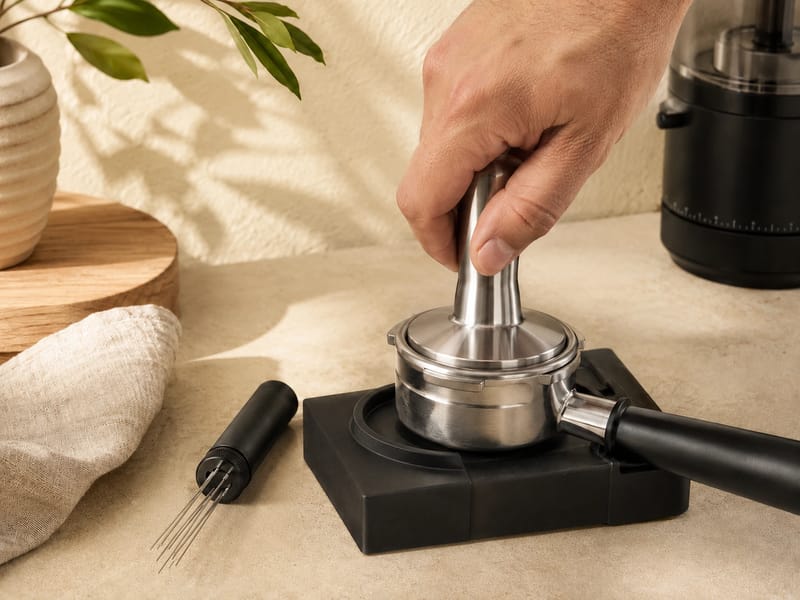
If you see clumps or a strong mound, use a thin-needle distribution tool. Move the needles through the full depth of the basket, then make shallower passes to level the surface. The goal is an even bed, not prolonged coffee archaeology.
4. Tamp level
Place the portafilter on a stable mat or tamping station. Keep the wrist straight and press vertically so the tamper base stays parallel with the basket.
Press firmly until the coffee stops compressing. Exact force matters less than a level, repeatable tamp. Pressing much harder after the puck is fully compressed adds strain, not consistency.
5. Inspect the edge
The surface should look level and unbroken. Brush loose grounds from the basket rim and portafilter ears so the gasket can seal cleanly.
Do not knock the side of the portafilter after tamping. It can separate the puck from the basket wall and create an inviting route for water.
What channeling looks like
With a bottomless portafilter, common signs include:
- espresso beginning strongly from one area;
- several streams that never join evenly;
- sudden pale jets or spraying;
- the stream moving sharply from side to side;
- one section of the basket remaining inactive.
A spouted portafilter hides most of this, but the cup still gives clues:
- shot times vary despite the same recipe;
- one shot is thin and sour, the next harsh and dry;
- flow accelerates suddenly near the end;
- the puck shows obvious holes or erosion.
Puck appearance alone is not proof. A wet puck can simply reflect basket headspace or machine design, and small marks after brewing do not always explain the flavour.
Common causes of channeling
| Cause | What to do |
|---|---|
| Grounds piled on one side | Distribute before tamping |
| Clumps | Use a thin-needle tool or improve grinder workflow |
| Tilted tamp | Tamp on a stable surface with the base level |
| Dose too low or high for the basket | Return to the basket’s intended range |
| Coffee on the basket wall after tamping | Avoid side tapping and aggressive polishing |
| Grind too fine | Move slightly coarser if the puck chokes and then breaks through |
| Damaged basket or dirty shower screen | Clean and inspect the equipment |
Do you need a distribution tool?
A thin-needle tool can help when grounds clump or land unevenly. A dosing funnel makes the process tidier and prevents coffee escaping the basket.
A spinning leveller can make the top look smooth, but it does not always distribute grounds through the full depth. It is optional, not a substitute for a good grinder and consistent technique.
A self-levelling tamper can improve repeatability, especially when several people use the machine. A standard flat tamper also works when it fits the basket properly and is used level.
Consistency before perfection
Do not add every puck-preparation technique at once. Start with the shortest workflow that produces even shots:
weigh → distribute → tamp level → brew
If shots remain inconsistent, add one improvement and compare. A nine-step ritual that changes every morning is less useful than a simple routine repeated well.
Try this today
Prepare three pucks using exactly the same dose. Before tamping, view each basket at eye level and check whether the surface is evenly filled. Tamp on a stable surface, then rotate the portafilter to inspect whether the tamper base stayed level.
Pull the shots and compare time, flow and taste. Your aim is not a beautiful puck; it is three similar cups.
Key takeaway
Distribute grounds evenly, tamp once and level, and avoid disturbing the puck afterwards. When water meets similar resistance across the basket, espresso becomes easier to dial in and repeat.
Finished this lesson?
0 of 8 lessons completed · 0% complete