
0 of 7 lessons completed · 0% complete
Arabica vs Robusta: What’s the Difference?
Arabica is usually sweeter and more aromatic, while Robusta brings more caffeine, body and bitterness. Neither is automatically better: the right choice depends on the coffee, roast and drink you want to make.
By KAVOVOUpdated 10 minutes read
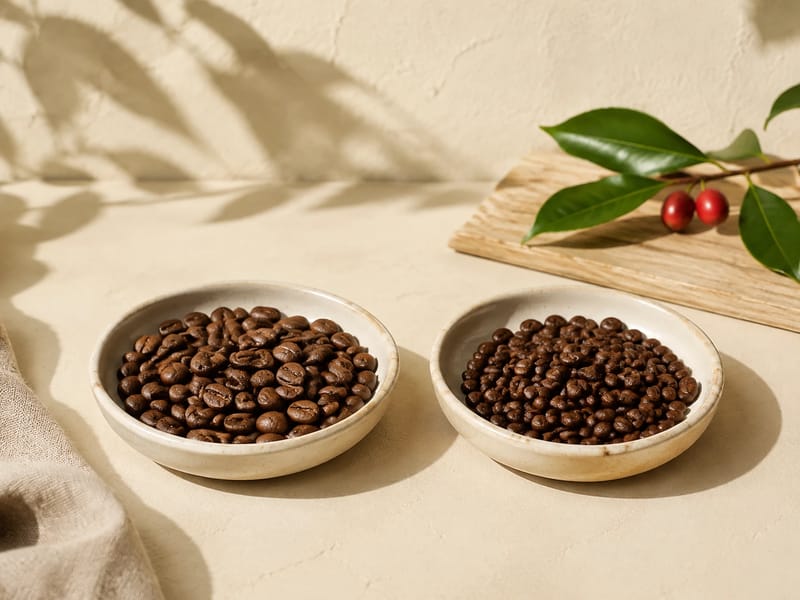
Arabica vs Robusta: The Short Answer
Arabica is usually sweeter, softer and more aromatic, often with fruit, floral, caramel or nut-like flavours. Robusta usually contains more caffeine and brings a heavier body, firmer bitterness and dense crema.
Neither species is automatically better. A carefully produced fine Robusta can be clean, sweet and complex, while poorly grown or stale Arabica can taste flat or harsh. Choose according to the drink you enjoy, the producer’s quality and the way you plan to brew it.
Arabica vs Robusta Comparison
| Characteristic | Arabica | Robusta |
|---|---|---|
| Typical flavour | Aromatic, fruit, floral, caramel or nuts | Cocoa, cereal, spice, wood or earth |
| Sweetness | Usually more apparent | Usually lower, though fine lots can be sweet |
| Bitterness | Usually softer | Usually more pronounced |
| Acidity | Often brighter and more noticeable | Usually lower and rounder |
| Body | Light to medium, sometimes silky | Medium to heavy, often dense |
| Caffeine | Lower, commonly around 1–1.5% by dry mass | Higher, commonly around 2–2.7% by dry mass |
| Crema | Finer and sometimes less persistent | Often denser and more persistent |
| Growing conditions | Cooler highlands; generally more delicate | Warmer lowlands; generally more resilient |
| Typical price | Usually higher | Usually lower |
| Common use | Speciality filter, single-origin and aromatic espresso | Espresso blends, strong milk drinks and instant coffee |
These are tendencies, not promises. Variety, origin, processing, roast, freshness and brewing can all move a coffee away from the typical profile.
What Are Arabica and Robusta?
Arabica and Robusta come from different coffee species. Arabica means Coffea arabica. Robusta is the widely used trade name for Coffea canephora, a genetically diverse species with many cultivated populations.
Arabica developed through a natural relationship between ancestors related to Canephora and Coffea eugenioides. It has less genetic diversity than Canephora and is generally more vulnerable to heat, pests and disease. It tends to perform well at cooler, higher elevations, although altitude alone never guarantees flavour.
Canephora is better adapted to warmer conditions and often produces more fruit per plant. Its name, Robusta, reflects that agricultural resilience. It does not mean every Canephora plant, farm or cup tastes the same.
Species is therefore one useful line on a coffee bag, not a complete description. Two Arabicas from different varieties and origins can taste less alike than an excellent Arabica and a carefully processed fine Robusta.
How Arabica and Robusta Taste
Arabica is associated with a wider range of delicate aromas and brighter acidity. Depending on variety and origin, it may suggest berries, citrus, stone fruit, flowers, honey, caramel, chocolate or nuts. Its bitterness is often lower, so sweetness and acidity are easier to notice.
Robusta commonly tastes more intense. Cocoa, dark chocolate, roasted cereal, spice, wood and earthy flavours are common descriptions. It often feels heavier on the palate and leaves a longer bitter finish. In a poor commodity lot, that intensity can become rubbery, smoky or aggressively harsh. Those defects come from material quality and handling, not from an unavoidable rule that all Robusta must taste unpleasant.
Fine Robusta, also called fine Canephora, is harvested, processed, sorted and evaluated with greater care. The best lots can show clean chocolate, ripe fruit, spice and substantial sweetness alongside the species’ natural body. They deserve to be judged as coffee, not as a cheaper imitation of Arabica.
Which Has More Caffeine?
Robusta generally contains considerably more caffeine than Arabica. “Roughly twice as much” is a useful broad comparison, although exact figures vary with genetics, growing conditions and analysis.
That does not mean every cup made with Robusta has twice the caffeine. The dry coffee dose, serving size, blend percentage and brewing method decide how much caffeine reaches the drink. A large filter coffee made from Arabica can contain more total caffeine than a small espresso blend containing Robusta simply because the filter brew uses more coffee and produces a larger serving.
If you are sensitive to caffeine, compare recipes and portions rather than relying on the species label alone.
Crema, Body and Bitterness
Robusta is valued in many espresso blends because it can produce dense, persistent crema and a weighty mouthfeel. Its higher concentration of soluble material and different bean chemistry help create that familiar thick surface and forceful body.
Crema is not a quality score. Freshness, roast, pressure, recipe and gas retained in the beans all affect it. A pale, foamy layer can sit on an unbalanced shot, while an excellent light-roast Arabica may produce less crema and taste far more expressive.
Bitterness works the same way. Robusta tends to bring more, but roast level and extraction can amplify or soften it. A dark-roasted Arabica pulled too long may taste more bitter than a medium-roasted fine Robusta brewed carefully.
Where and How They Are Grown
Arabica is commonly grown in cooler highland regions across Latin America, East Africa and parts of Asia. It generally needs more careful management and is vulnerable to coffee leaf rust, pests, frost and rising temperatures. Slower cherry development in cooler conditions can support complex flavour, but farm practice and harvest quality remain essential.
Robusta thrives in warmer, lower environments and is widely produced in Vietnam, Brazil, Indonesia, Uganda and India. It often yields more, resists some diseases better and tolerates conditions that are difficult for Arabica. That resilience matters as coffee-growing regions respond to climate pressure.
Neither growing pattern is universal. Some Arabica grows at relatively low elevations, and some Canephora is cultivated with meticulous attention to variety, shade, ripeness and processing.
Why Robusta Is Usually Less Expensive
Robusta is often less expensive because its plants can be more productive, resilient and easier to grow in warm lowlands. Lower production risk and higher yields can reduce the cost per kilogram. Large volumes also enter commodity and soluble-coffee markets where price is a major purchasing factor.
Price still reflects more than species. Selective picking, careful fermentation, clean drying, sorting and traceability all cost money. Fine Robusta can command a premium, while undifferentiated Arabica can trade at low commodity prices. “Usually cheaper” is an economic tendency, not a verdict on the people or skill behind the coffee.
Arabica vs Robusta for Espresso
For aromatic, sweet or fruit-led espresso, 100% Arabica is the common starting point. It can produce a softer shot with clearer acidity and more distinct origin character. The Espresso recipe gives a neutral 1:2 starting ratio that lets you judge the coffee before making larger changes.
For a traditional, full-bodied espresso with pronounced bitterness and a persistent crema, an Arabica–Robusta blend may be a better fit. Robusta can help the coffee stay recognisable in a cappuccino or latte, particularly when paired with medium or darker roasting.
Whichever species you choose, use the Espresso brew guide to control dose, yield, time and puck preparation. Species cannot rescue stale beans or uneven extraction.
Why Espresso Blends Often Use Both
A blend can use the strengths of each species deliberately. Arabica may supply aroma, sweetness and acidity; Robusta may add body, crema, caffeine and a firmer finish. A small Robusta proportion can make a blend feel more substantial without erasing its aromatic character.
This is especially useful in milk drinks. Milk softens acidity and bitterness but can also hide subtle coffee flavour. A well-built blend keeps enough intensity to remain present. Browse the milk coffee recipes to compare how much milk a cortado, flat white, cappuccino and latte add to the same espresso base.
The percentage alone does not reveal quality. A transparent roaster should be able to explain what each component contributes and how the blend is intended to taste.
Which Coffee Should You Choose?
Choose 100% Arabica when you want fragrant filter coffee, brighter acidity, clearer origin character or a softer espresso. Choose a good Arabica–Robusta blend when you want a heavier traditional espresso, substantial crema, higher bitterness or a coffee that remains forceful through milk.
Try fine Robusta when you are curious about the species on its own. Brew it as the producer recommends before forcing it into an Arabica recipe. Its greater solubility and different structure may favour a slightly cooler temperature, coarser grind or shorter contact time.
The most useful comparison is side by side. Keep the brewing method and drink strength sensible, then compare aroma, sweetness, acidity, bitterness, body and aftertaste without deciding in advance which sample is supposed to win.
Does Roast Level Matter More Than Species?
Sometimes it does. A dark roast pushes both species towards roast-led flavours such as dark chocolate, smoke and bitterness. A light roast preserves more origin and processing character but may expose sharpness when the brew is under-extracted.
Species still influences caffeine, body and common flavour tendencies, yet the coffee roast levels guide may predict your immediate experience better than an Arabica label on its own. Compare roast date and intended brew method as well as species.
Choose Based on How You Brew
- Espresso: start with 100% Arabica for clarity or a transparent Arabica–Robusta blend for heavier body and crema. Use the Espresso guide for dialling in.
- Milk drinks: a medium-roast Arabica or balanced blend usually keeps enough chocolate and caramel character through milk. Stronger traditional blends suit larger lattes.
- V60: washed or carefully processed Arabica is the easiest starting point for clarity and aroma. Fine Robusta can work, but follow its roaster’s recipe and expect more body. See the V60 guide.
- French Press: either species can suit immersion. Arabica may taste round and aromatic; fine Robusta can make a dense, cocoa-led cup. Avoid overly fine grinding.
- Moka Pot: medium or medium-dark blends are forgiving and stay intense. The Moka Pot guide explains how low heat prevents that intensity becoming harsh.
- Cold brew: chocolate-led Arabica and clean Robusta blends can both work. Start with a ready-to-drink ratio before making concentrate, and judge caffeine by the final dilution.
These are starting recommendations, not permission slips. A well-roasted coffee with a clear recipe matters more than following a species stereotype.
Frequently asked questions
Is Arabica better than Robusta?
No. Arabica is often sweeter and more aromatic, but species is not a quality grade. Fine Robusta can be clean, sweet and complex, while poorly produced Arabica can be unpleasant. Judge the producer, processing, roast and cup as well as the species.
Which coffee has more caffeine?
Robusta generally contains substantially more caffeine in the bean than Arabica. Total caffeine in a drink still depends on the coffee dose, blend percentage, brew method and serving size.
Is Robusta more bitter than Arabica?
Usually, yes. Robusta commonly has firmer bitterness and a heavier finish, but roast level and extraction also influence bitterness. Careful processing and brewing can make fine Robusta balanced rather than harsh.
Why is Robusta used in espresso blends?
Robusta can add body, dense crema, caffeine and a strong cocoa-led finish. Blenders often combine those qualities with Arabica’s aroma, sweetness and acidity, particularly for espresso served with milk.
Does Robusta always produce more crema?
No. It often produces denser, more persistent crema, but freshness, roast, recipe and extraction also matter. Crema quantity alone does not show whether an espresso tastes good.
Can Robusta coffee be high quality?
Yes. Fine Robusta or fine Canephora is produced with careful harvesting, processing, drying and sorting. Good lots can show clean chocolate, fruit, spice and sweetness without the defects associated with poorly handled commodity coffee.
Which is better for milk drinks?
Both can work. Sweet medium-roast Arabica suits smaller drinks where nuance remains visible, while an Arabica–Robusta blend can keep more body and intensity in a cappuccino or latte. Choose according to the milk quantity and flavour you prefer.
Key takeaway
Arabica and Robusta offer different tendencies, not a hierarchy. Start with the flavour and drink you want, then look for fresh, carefully produced coffee and brew it with a repeatable recipe.
Finished this lesson?
0 of 7 lessons completed · 0% complete